
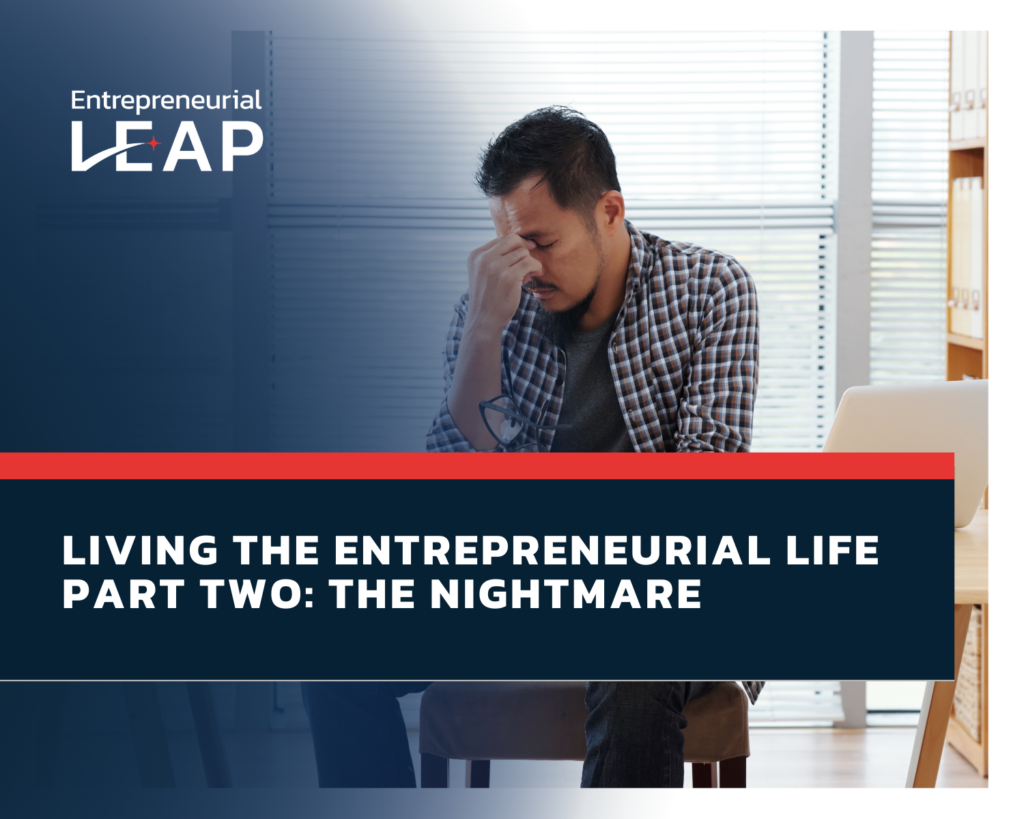
If you’ve ever dreamed of starting your own business, you probably pictured something exciting, doing work you love, helping people, making money, and having the freedom to live life on your own terms.
That’s what we covered in Part One of this Living the Entrepreneurial Life series: the entrepreneurial dream.
But just like in real life, not all dreams go as planned. Sometimes, being an entrepreneur can feel like a nightmare: full of stress, burnout, and frustration. That’s what we’re talking about today: the darker side of entrepreneurship.
This post isn’t here to scare you or make you second-guess your goals. It’s here to help you. Think of it as a warning sign on the road. If you know what dangers lie ahead, you’ll be much better prepared to avoid them.
Our goal is to show you what a business nightmare looks like, so you can recognize the warning signs early and make smarter decisions. That way, you’ll stay on the path to building the business and life that you truly want.
Let’s dive in.

Now imagine this:
You walk into your business and immediately feel the weight of the day pressing down on you. Your team is just going through the motions. They don’t seem to care about your customers, your company, or the work they’re doing. They show up, punch in, and count the minutes until they can leave. There’s no energy, no passion, just a paycheck mindset.
You rarely hold team meetings. And when you do, it’s only because there’s a fire to put out. People aren’t clear on who’s responsible for what. Deadlines are missed. Projects get dropped. And instead of leading your team, you find yourself avoiding them altogether because every conversation feels draining.
Your customers? They’re not loyal. They’re only sticking around because your prices are low. And even then, they’re not happy. Every interaction feels tense, like they’re just waiting for a reason to complain or leave. As soon as someone offers a better deal, they’re gone — no thank you, no goodbye.
Meanwhile, you’re working yourself to the bone. Early mornings, late nights, weekends, all just to keep the business afloat. You haven’t had a real vacation in years, and when you are home, you’re distracted, tired, and short-tempered. Your health is suffering. Your relationships are strained. Your family misses you, and you’re not fully present even when you are around.
Your staff keeps quitting. You’re constantly hiring and training new people, which takes time and energy you don’t have. The team you do have doesn’t respect you. Some might even be harming your business: treating customers poorly, cutting corners, or worse, stealing. The culture is toxic, morale is low, and the business isn’t growing. It’s stuck. Or worse – it’s slowly dying.
This isn’t what you signed up for. This isn’t the dream.
But here’s the truth: It doesn’t have to be this way.
This nightmare is avoidable. And the first step to avoiding it is recognizing it and doing something different.
Let’s talk about how.

This doesn’t have to be your story. At Entrepreneurial Leap, our mission is to help aspiring entrepreneurs reach their dream faster and with fewer mistakes.
The nightmare exists because of a handful of common, yet critical errors. Let’s identify and eliminate them.
Read more about: The 8 MUST-DOS to Increase Your Odds of Entrepreneurial Success

In Entrepreneurial Leap, Wickman describes this scenario in painful detail:
“Your people aren’t engaged, passionate, or concerned about your customers. They show up for their paychecks and can’t wait to go home. You meet with your leadership team rarely, and only when there’s a crisis to solve.”
In Entrepreneurial Leap, Gino Wickman describes the painful reality many entrepreneurs face when their dream business turns into a nightmare, they wake up dreading work because their team doesn’t care, people just show up to collect a paycheck, there’s no energy, no ownership, and no real teamwork, meetings are rare and only happen when something’s already broken, and nobody really knows who’s responsible for what, so things slip through the cracks and you’re constantly cleaning up the mess yourself.
Meanwhile, you’re working nonstop; early mornings, late nights, weekends, no real vacations, always putting out fires, while your health suffers, your relationships strain, and your energy runs dry, and through it all, there’s no clear vision, no plan, no progress, just a business that feels stuck and a life that’s slowly unraveling.
You’re not just losing your team—you’re also losing your customers, because they can sense the instability in your business just as much as you can, and while they may stick around for now, it’s usually only because your prices are low, not because they love what you offer or feel loyal to your brand.
They’re quietly frustrated, and over time, their patience wears thin, until:
When that happens, you’re left chasing after new customers just to stay afloat, watching your revenue dip, your stress levels rise, and wondering why all your hard work still feels like you’re treading water in a leaky boat.
But this, too, can be fixed—starting with clarity and connection.
Gino Wickman teaches that customer loyalty is built on three things: knowing exactly who your ideal customer is, consistently delivering value, and communicating with authenticity and care. When you try to serve everyone, you end up connecting with no one—so get clear on your target audience, understand what they truly need, and tailor your messaging and service around that.
Once you know who your customer is, the next step is creating consistency. That means building systems that deliver a reliable, smooth experience every time. It means training your team to care about the customer, not just the transaction. And it means showing up with integrity—doing what you say you’ll do, fixing mistakes quickly, and being human in your communication.
The worst part of the entrepreneurial nightmare is that it doesn’t crash down all at once—it sneaks up on you slowly, quietly, almost invisibly, until one day you look around and realize your business is no longer growing, your energy is gone, your team is lost, and the work you once loved now feels like a burden you can’t escape.
Gino Wickman warns that without a clear vision guiding your decisions, your business gradually loses its sense of direction, its momentum, and eventually, its ability to survive—and by the time you notice, the damage is already deep.
You stop leading with purpose and start reacting to problems. The daily grind takes over, and long-term thinking disappears. You’re stuck just trying to get through the week, but meanwhile, your competition is moving forward, your market is shifting, and your team is drifting without a map.
Here’s what starts to happen:
Eventually, if nothing changes, the business plateaus, loses relevance, or begins a slow decline. And as Wickman puts it, too many of these companies either quietly die out—or get bought for pennies on the dollar by someone with a clearer plan.
You didn’t build your business to feel stuck, exhausted, or cornered. But without vision, that’s where it ends up—slowly fading, one missed decision at a time.
The good news? You can revive your business—and it starts by creating a crystal-clear vision.
Wickman teaches that vision is the compass for your entrepreneurial journey. When you know exactly where you’re going, everything changes: you make faster, better decisions, your team aligns around the same goals, and your business finally has a sense of purpose again.
To overcome this slow death, take the time to define your vision—get specific about what your business looks like in three to ten years, who you serve, what problem you solve, what makes you unique, and how you plan to grow. Write it down. Share it often. Make it the foundation for every decision you make.

The entrepreneurial journey isn’t easy — but it is worth it. You don’t have to figure it all out on your own, and you certainly don’t have to settle for survival mode. The nightmare we described isn’t your fate. It’s a warning — and a choice.
You can choose a different path.
Start by being honest with yourself. Look at the eight critical mistakes and ask:
Write your answers down. Don’t overthink it. Just take action — one step at a time.
At Entrepreneurial Leap, we exist to help people like you build successful, fulfilling businesses based on who you are and what you’re truly meant to do. If today’s post hit home, don’t stop here.
Visit e-leap.com to discover free tools, resources, and next steps to help you:
You were born to do this — and we’re here to help. Take the leap.